Home
Home
If Someone from the Family is at War, the Whole Family is at War: How Does the USAID Project Support Wives and Mothers of Defenders
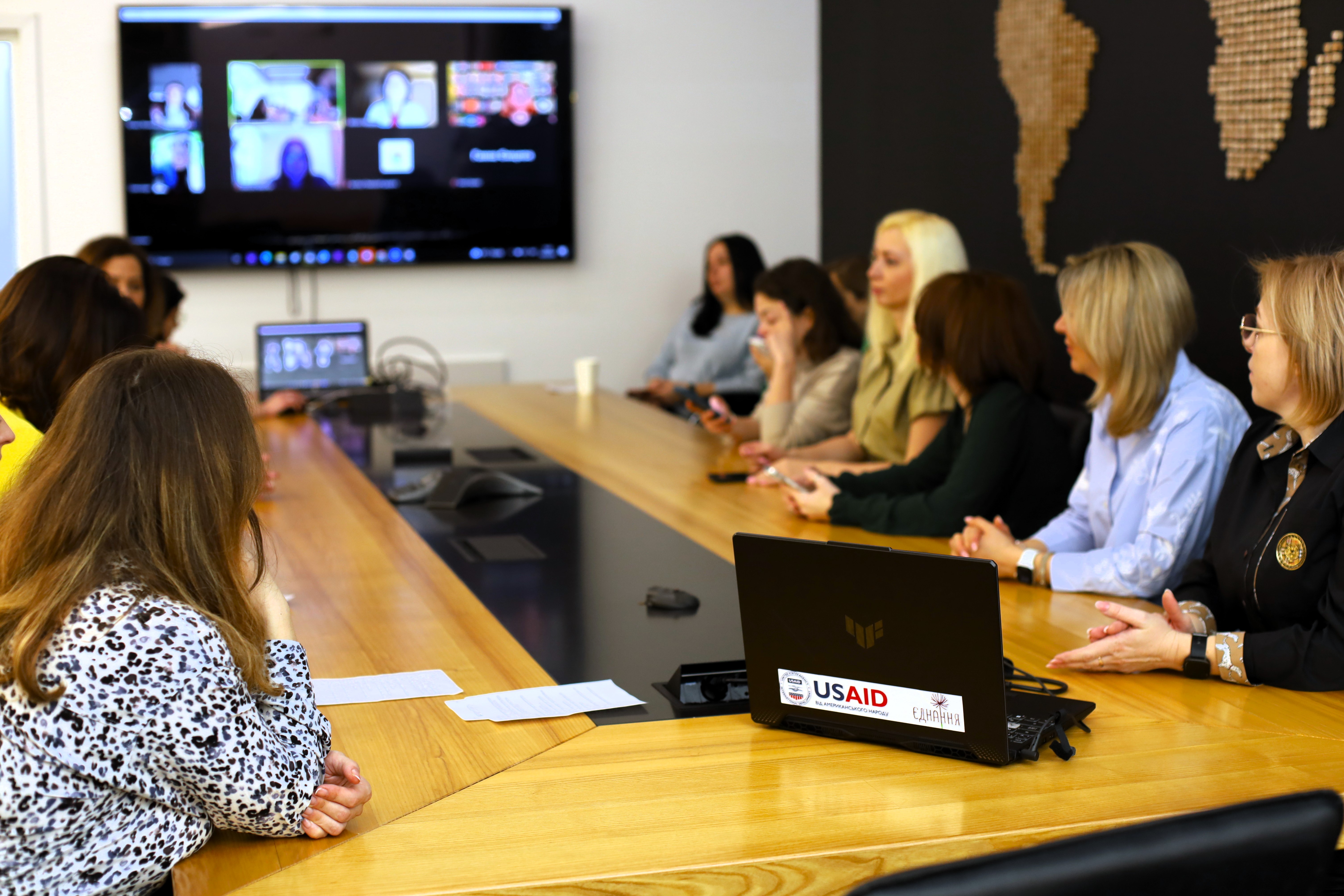
The wives and mothers of defenders may not sleep in trenches, repel enemy artillery attacks, or evacuate the wounded from the battlefield, but face daily pressure from circumstances beyond their control. They endure anxiety, worry, helplessness, tension, and unresolved household issues while their loved ones risk their lives.
War is a challenge for the entire family. Military families encounter numerous difficulties every day. Currently, hundreds of thousands of women are experiencing one of the most challenging periods of their lives, managing the well-being of their children, loved ones, and relatives who require attention and support.
NGO "Public Movement 'Women's Power of Ukraine”, supported by ISAR Ednannia, has launched the Service for Psychosocial Support of Military Families Project. This initiative provided informational and psychological assistance to the families of Ukraine's defenders in 2023-2024.
The project offers women a chance to communicate with specialists, connect for mutual support, and receive tools to improve their well-being. This initiative positively impacts relationships within military families, helps manage emotional challenges, and provides guidance on handling social issues. The Psychosocial Support Service offers a crucial lifeline for those struggling to cope independently.
Diana, one of the project participants, learned to manage her strong emotions thanks to the support group: "I believe that if someone from the family is at war, the whole family is at war. People don't understand this, but women in the support group feel it. It was heartening to see women who were desperate and apathetic at the first meeting talk about how their lives had improved by the last meeting. They spoke about doing yoga, dancing, and taking care of themselves. It was like magic."
Currently, the project has achieved:
- Conducted 83 support meetings.
- Assisted 242 women, including online consultations.
Participants of the support groups describe their experience as invaluable.
“The work of psychologists is extremely important. It's worth taking advantage of whenever possible," comments Anna, who, thanks to the support group, learned to assert her boundaries and handle difficult situations.
"I was indifferent to everything and just wanted to cry. Seeing happy men on the streets and hearing stories of men who left was very painful. Couples on the street were especially hard to see. I started looking for groups on the internet, clicked on the first link, read about it, and realized this was exactly what I needed. The group was about me and for me. I filled out the form and immediately signed up for the next session," says Yevgenia, who found both support and the strength to seek it out.
"The first group meeting was quite interesting. We were asked to prepare tea and a blanket. I immediately felt comfortable. I felt like we were all one. It was easy to open up, and each of us could share as much as we wanted about ourselves. I let everything out and felt understood. I felt relieved after talking and being heard. I eagerly awaited the second meeting. During one session, we practiced anxiety reduction techniques. They seemed simple, but they worked. We also had a chat to talk and even considered meeting up later," shares Yulia, who, thanks to the support group, began to give herself permission to rest.
The Service for Psychosocial Support of Military Families continues its work. Any woman from a military family who needs counseling or emotional support can contact the hotline at 0 800 332 720 or fill out the help form on the website: https://www.pidtrymka.in.ua/.
The initiative is made possible by the generous support of the American people through the United States Agency for International Development (USAID) within the Ukraine Civil Society Sectoral Support Activity implemented by ISAR Ednannia in partnership with the Ukrainian Center of Independent Political Research (UCIPR) and Centre for Democracy and Rule of Law (CEDEM). The contents are not the responsibility of ISAR Ednannia and do not necessarily reflect the views of USAID or the United States Government.
Education that Changed 70 Lives: Behind the Curtains of USAID, ISAR Ednannia, and ‘Projector’ Female Project
The economic empowerment of women from newly liberated territories in Ukraine presents a significant challenge in the post-war recovery landscape. As these regions transition from military occupation to reintegration into the national framework, women face unique obstacles in regaining their economic independence and rebuilding their lives. Many have lost their homes, jobs, and businesses during the war, leading to a dire need for employment opportunities and vocational training. Additionally, psychological trauma and social stigmas complicate their re-entry into the workforce.
There is a need, there is an answer.
Recognizing this critical need, the USAID Ukraine Civil Society Sectoral Support Activity grantee NGO “Projector” with the support of ISAR Ednannia, launched an initiative to help these women reclaim their economic independence. The project focused on the creative and IT industries, known for their resilience, adaptability, and potential for remote work, offering a viable pathway to economic recovery.
With a keen understanding of the barriers these women face, NGO “Projector” designed an inclusive program centered on informal education. This program provided a flexible, accessible, and practical route to skills development and economic empowerment for 70 women and girls from newly liberated territories.
Specialized training programs and workshops in high-demand areas such as Web Design, IT Project Management, and Social Media Marketing equipped participants with the skills and project portfolios needed for success in the creative and IT industries. Beyond technical skills, the project offered career consultations and mentorship support to enhance participants' competitiveness in the job market.
Graduates received a ready-made CV and assistance in finding employment through tailored consultations. Recognizing the critical role of psychological well-being in overall success, the project also provided dedicated psychological support to help participants adapt to new conditions and thrive. With their new skills and knowledge, participants have the opportunity to contribute to economic development in their oblasts and aid in the restoration of the newly liberated territories.
"My expectations were met and even exceeded. I realized that I wouldn't become an expert after just three months of training, but I gained a solid understanding of the profession and became quite proficient in Figma. Before applying, I hesitated, wondering if I could handle it, if I had the strength and the time because I knew it would require effort. Fortunately, everything was recorded. Many women feel a profound insecurity, a byproduct of losing everything they have. The war and its losses weigh heavily on us all. But regardless of what anyone says, we must go on living. I choose to be strong for my little girl by my side and for my son, who is on the frontlines," says Anastasia Polianska, a program participant.
The project's impact extended far beyond individual economic empowerment. By showcasing the success stories of women and girls in the creative and IT industries, it challenged entrenched gender stereotypes and underscored the importance of inclusivity and diversity in driving innovation and economic growth. A public campaign and sharing of these success stories served to inspire other women and girls to pursue similar paths, creating a ripple effect that benefits the broader society.
The outcomes of this project affirm the transformative power of targeted educational initiatives. It not only provided educational opportunities but also created conditions for full development and entry into the labor market for 70 women and girls from newly liberated territories. Additionally, the project contributed to building long-term resilience and challenging gender disparities, fostering a more inclusive and robust economic landscape.
The initiative is made possible by the generous support of the American people through the United States Agency for International Development (USAID) within the Ukraine Civil Society Sectoral Support Activity implemented by ISAR Ednannia in partnership with the Ukrainian Center of Independent Political Research (UCIPR) and Centre for Democracy and Rule of Law (CEDEM). The contents are not the responsibility of ISAR Ednannia and do not necessarily reflect the views of USAID or the United States Government.