Home
Home
A capable public administration will shape Ukraine’s path toward its European future
But what makes public administration truly capable?
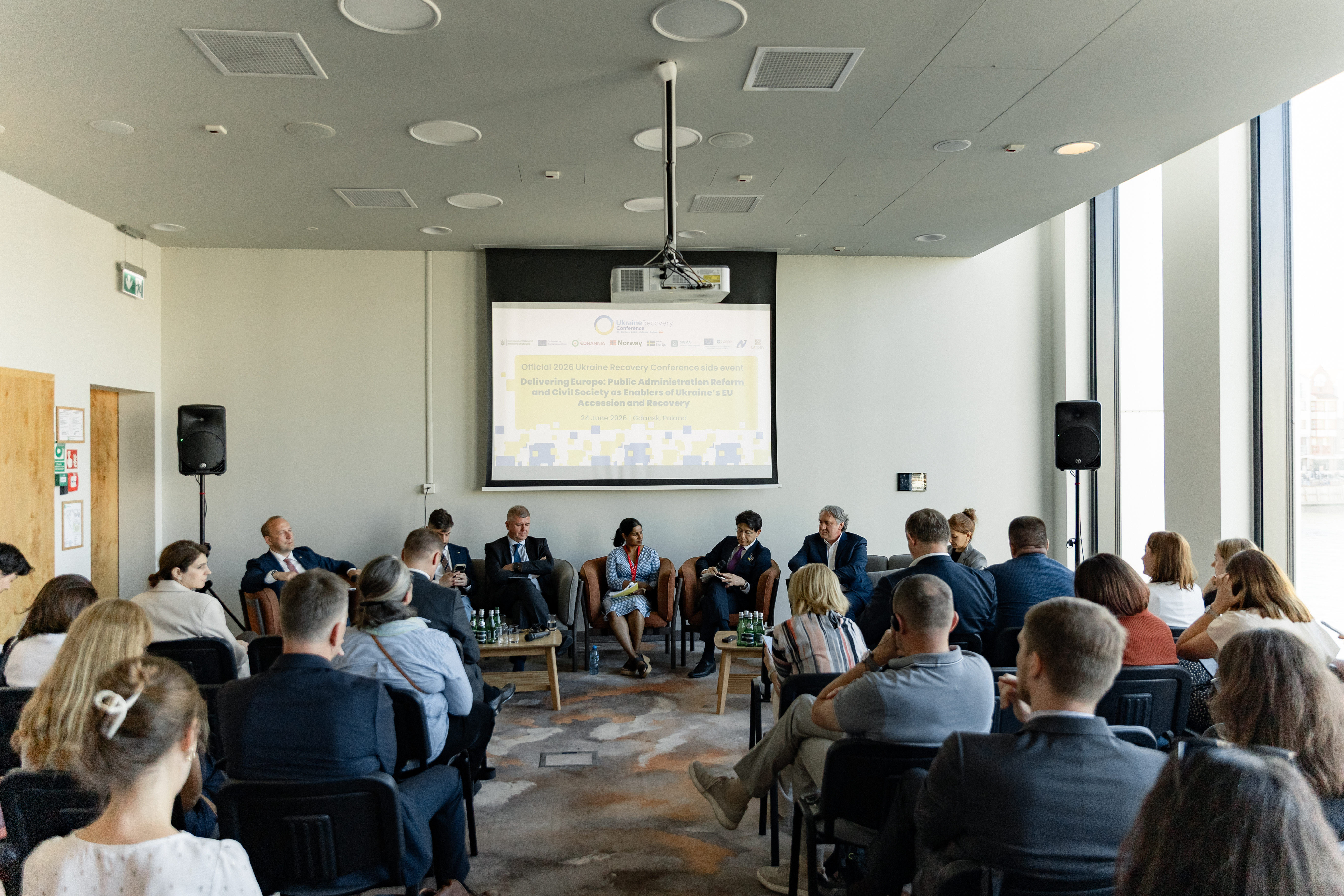
This question was at the heart of our official URC 2026 side event, “Delivering Europe: Public Administration Reform and Civil Society as Enablers of Ukraine’s EU Accession and Recovery.”
Together with representatives of the Government of Ukraine, civil society, and international partners, we explored how leadership, organisational culture, human capital, trust, and cross-sector partnership can strengthen public administration and support Ukraine’s EU accession and recovery.
So, what does capable public administration require? Here are some of the key takeaways from the discussion. 👇
💬 A new culture of public leadership.
Leadership rooted in service, a strong sense of public purpose, accountability, and commitment to the common good builds a public service that people trust.
💬 Trust built through openness and dialogue.
Capable institutions operate transparently. Trust grows through meaningful engagement, responsive communication, and involving people in decision-making.
💬 Investment in people.
A strong public service depends on skilled professionals, a modern organisational culture, opportunities for continuous learning, and decent working conditions. Investing in people is investing in sustainable reform.
💬 Strong analytical capacity.
Successful EU integration is not about copying legislation. It requires the ability to analyse policies, assess their impact, adapt them to Ukraine’s context, and engage openly with citizens and businesses.
💬 Partnership with civil society.
Modern public administration cannot succeed in isolation. It relies on genuine collaboration with civil society, which contributes expertise, preserves institutional memory, strengthens accountability, and helps reforms endure.
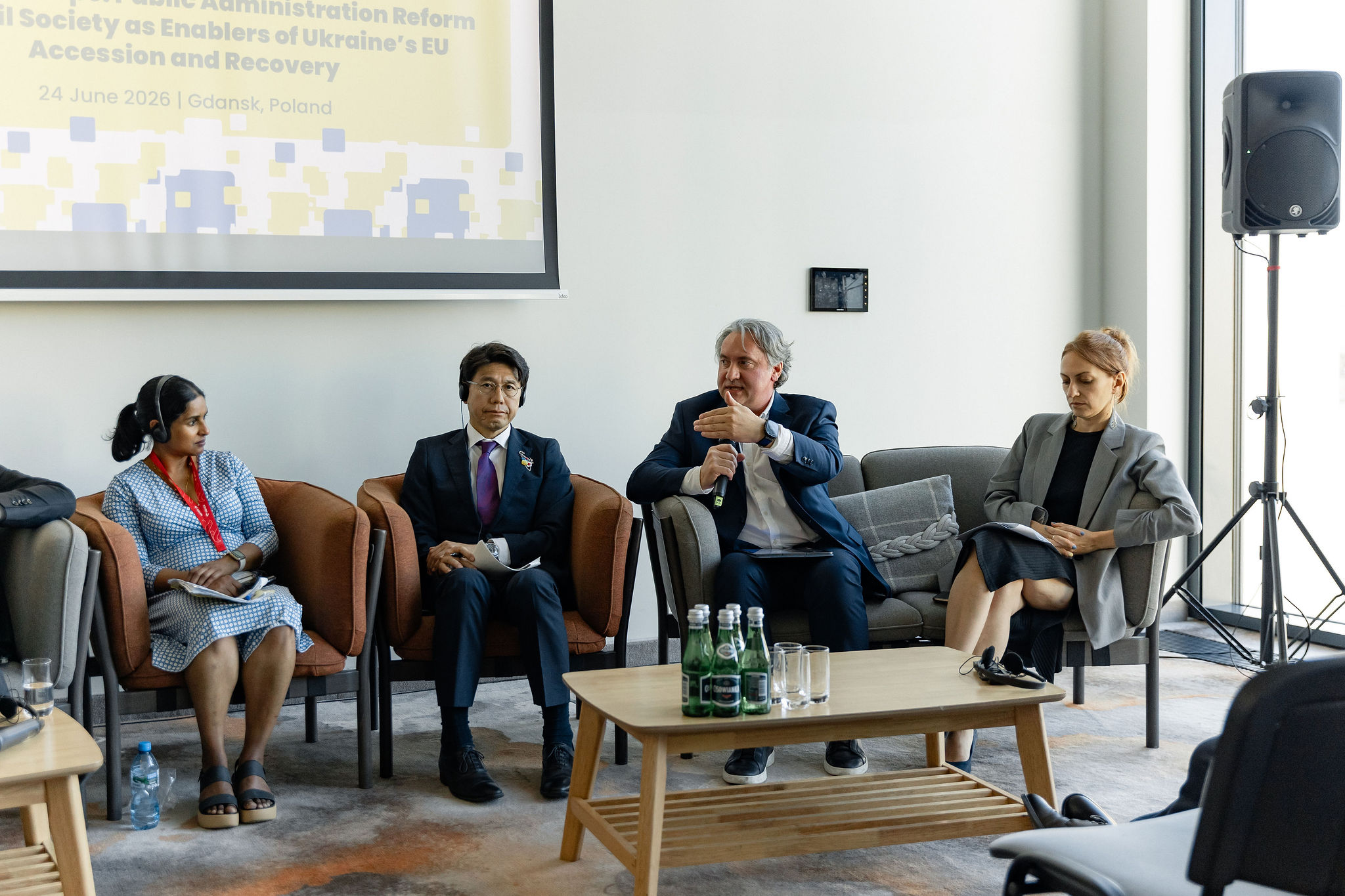
As ISAR Ednannia Executive Director Volodymyr Sheihus noted, civil society is an indispensable pillar of effective public administration reform. It contributes by:
✅ promoting democratic and open governance;
✅ strengthening government accountability to citizens;
✅ improving the quality of public policymaking;
✅ safeguarding against the concentration of power;
✅ building public trust in state institutions.
Civil society serves as a trusted partner, an accountability mechanism, and a catalyst for change, helping build democratic, transparent, and accountable public institutions.
🤝 We sincerely thank all speakers, moderators, participants, and partners for an insightful discussion. There is still much work ahead, but conversations like these help shape a shared vision for a capable public administration that can lead Ukraine towards European Union membership.
ISAR Ednannia’s participation is supported within the framework of the project “Strong Civil Society of Ukraine — a Driver towards Reforms and Democracy”, implemented with the financial support of Norway and Sweden.
ISAR Ednannia’s participation is also supported within the framework of the EU Unity4Community project, co-funded by the European Union.
OECD SIGMA — Support for Improvement in Governance and Management — is a joint initiative of the OECD and the European Union, principally financed by the EU.
The PAR4UA Project, “Strengthening Ukraine’s Public Administration Reform for EU Integration”, is implemented by the Professional Government Association in partnership with Providus Public Policy Centre, Latvia, with the support of the Ministry of Foreign Affairs of Latvia.
Information Session on the “Circle of Life. Circle of Mind” Grant Competition
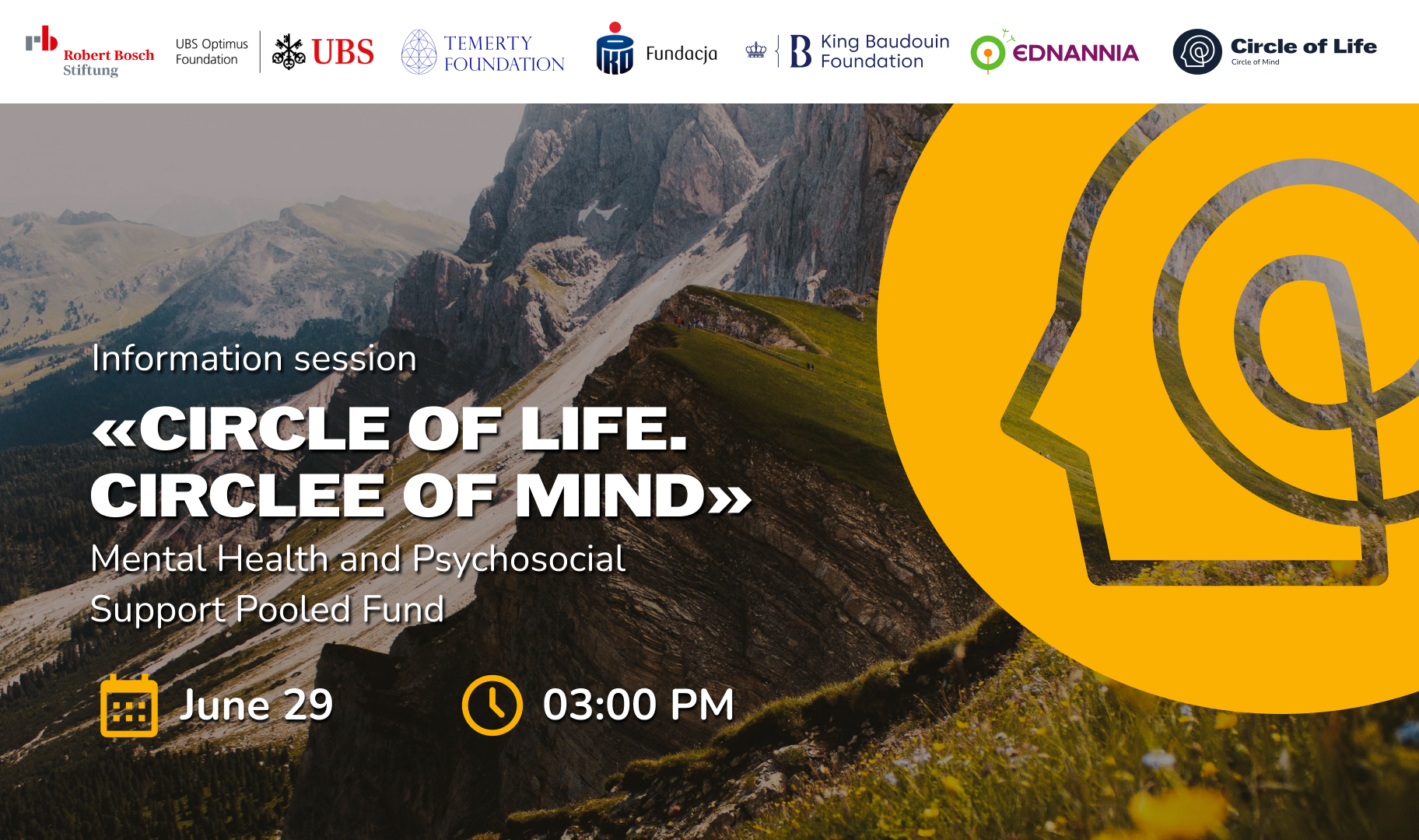
We invite representatives of civil society and charitable organisations to join an online information session within the framework of the “Circle of Life. Circle of Mind” grant competition of the Mental Health and Psychosocial Support Pooled Fund.
📅 29 June 2026
🕒 03:00 PM
📍 Online via Zoom (registration via the below)
During the session, participants will learn more about:
🔹 the goal and priorities of the competition;
🔹 available grant types and funding opportunities;
🔹 eligibility requirements and key aspects of preparing applications;
🔹 important considerations for implementing projects in the field of mental health and psychosocial support.
The competition supports Ukrainian civil society and charitable organisations that help people and communities overcome the consequences of the war, develop sustainable models of care, and strengthen the support system in Ukraine.
Join the session to get answers to your questions and better prepare your application.
🔗 Registration and participation link:
https://ednannia.zoom.us/meeting/register/1VUSy6pJS9OgEhWWCVF7vA
📌 More information about the “Circle of Life. Circle of Mind” grant competition:
https://ednannia.ua/tryvaiut-hrantovi-konkursy/konkurs-navkolo-zhyttia-navkolo-dumok
Official Side Event of URC 2026: “Delivering Europe: Public Administration Reform and Civil Society as Enablers of Ukraine’s EU Accession and Recovery"
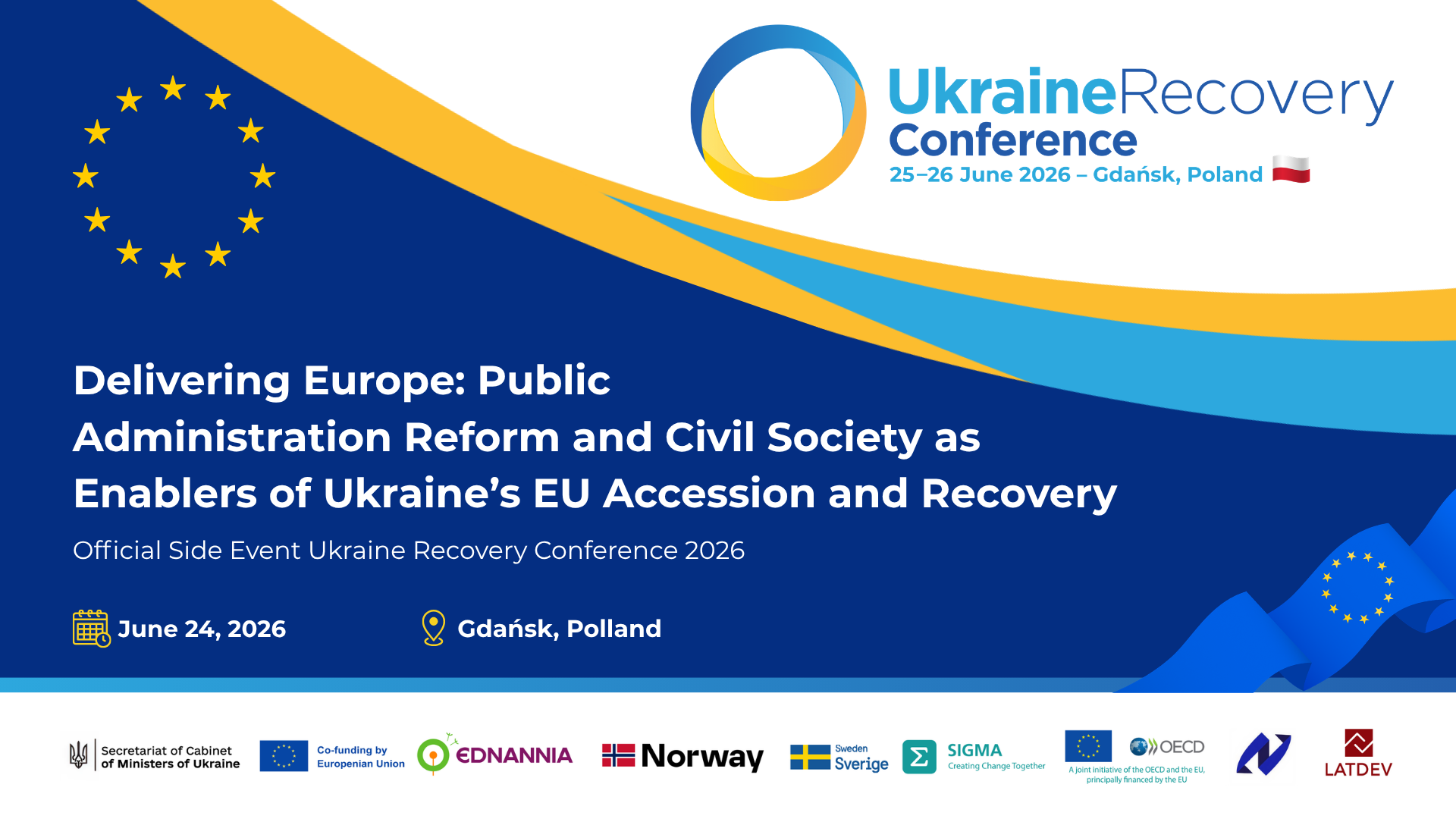
Ukraine’s path toward EU membership opens up new opportunities, but it also brings new responsibilities and challenges. There is still much work to be done — by government institutions, local authorities, and civil society alike.
But are we ready to change the way we govern? To move beyond the legacy of russia’s colonial governance model and embrace European values rooted in respect for every individual, partnership, trust, and self-respect?
These are the questions we will explore during the official side event of the Ukraine Recovery Conference 2026:
Delivering Europe: Public Administration Reform and Civil Society as Enablers of Ukraine’s EU Accession and Recovery
Together with representatives of government, civil society, and international partners, we will discuss how to strengthen Ukraine’s public administration on its path to the EU, enhance its capacity through meaningful cooperation between government and civil society, and draw on international best practices.
The event is designed as an open discussion focused on exchanging ideas and identifying practical solutions together.
24 June 2026
16:00–19:00
Holiday Inn Gdańsk City Centre, Gdańsk, Poland
Join the conversation on the changes that are essential for Ukraine’s successful European integration.
Register here:
Event is co-orginized by the Secretariat of the Cabinet of Ministers of Ukraine, OECD SIGMA, PAR4UA Project and ISAR Ednannia with support from European Union.
Organisational framework
OECD SIGMA — Support for Improvement in Governance and Management — is a joint initiative of the OECD and the European Union, principally financed by the EU.
The PAR4UA Project, “Strengthening Ukraine’s Public Administration Reform for EU Integration”, is implemented by the Professional Government Association in partnership with Providus Public Policy Centre, Latvia, with the support of the Ministry of Foreign Affairs of Latvia.
ISAR Ednannia’s participation is supported within the framework of the project “Strong Civil Society of Ukraine — a Driver towards Reforms and Democracy”, implemented with the financial support of Norway and Sweden.
ISAR Ednannia’s participation is also supported within the framework of the EU Unity4Community project, co-funded by the European Union.
The Community Development Success Index Presented
The Community Development Success Index - the first comprehensive analytical tool designed to assess the real state of communities and support data-driven decision-making - has been officially presented.
The Index was developed by ISAR Ednannia in partnership with the MHP-Hromadi and the research agency Info Sapiens, with the support of the European Union under the project “Unity for Community.” The event brought together representatives of national and local authorities, international organizations, businesses, civil society, and the media.
The Index reflects key principles of European integration - transparency, accountability, and evidence-based decision-making - and applies them at the community level. It is a tool that enables a shift from intuitive governance to evidence-based management, providing a foundation for strategic planning, self-assessment, and effective resource mobilization.
The Index combines more than 60 indicators across 8 domains and is based not only on statistical data but also on the lived experiences of residents. Its purpose is not to compare communities with one another, but to provide them with a practical tool for development.
The tool was piloted in four communities: Kaniv, Myronivka, Liubeshiv, and Trostianets.
Key findings of the study include:
- security has become the foundation of quality of life and community development;
- civic participation and social cohesion have a greater impact than economic indicators;
- transparency and the ability to influence decision-making matter more than the size of the budget.
The Index creates a shared “language” for interaction between communities, authorities, donors, and businesses, and opens up new opportunities for sustainable development and recovery. During the presentation, it was also announced that the methodology will be made openly accessible, the tool will be further scaled, and an expert club will be established to support its practical application.
🔗 Watch the full video of the presentation at the link