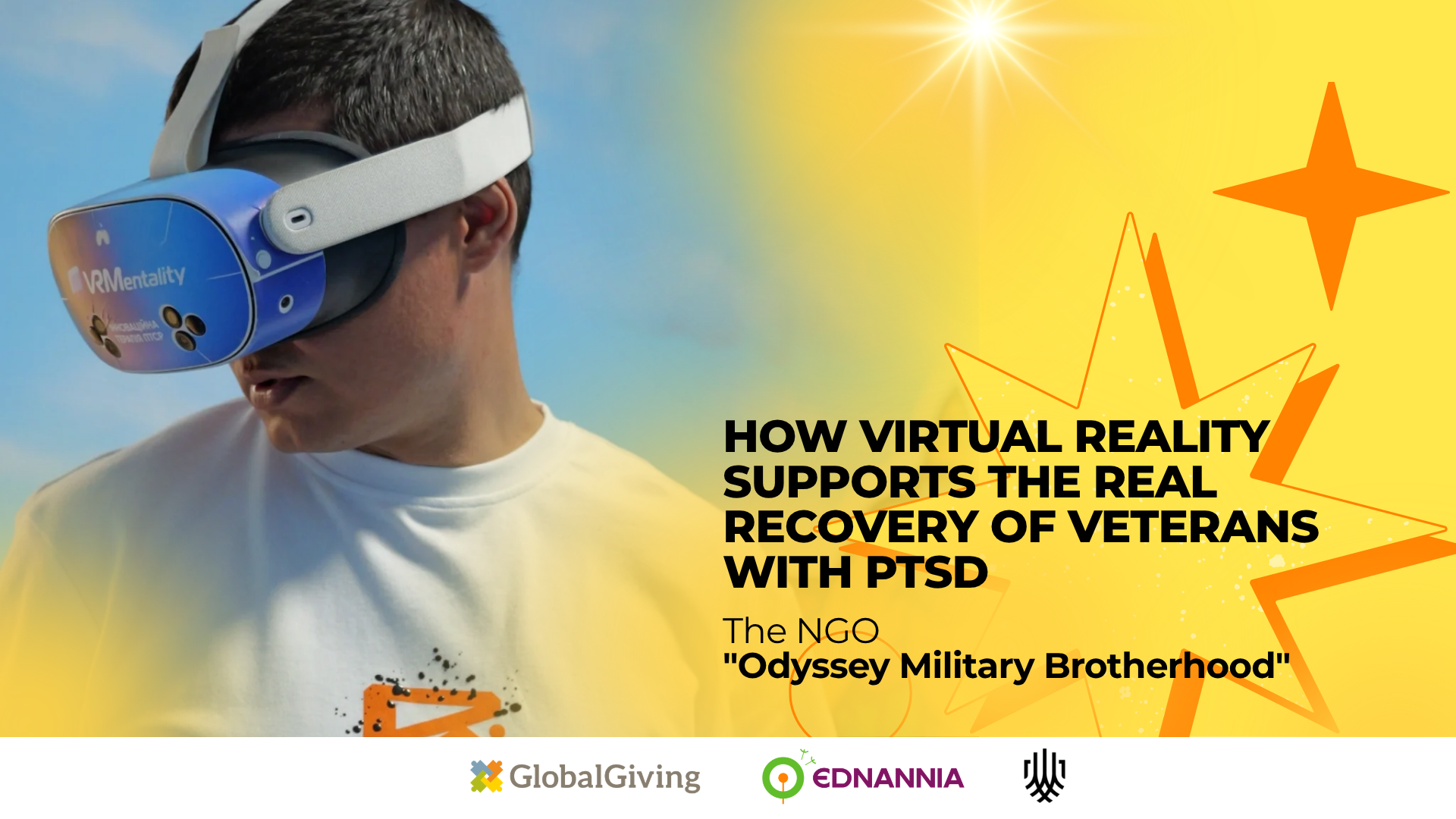
Almost everyone who returns from the war that russia treacherously unleashed against Ukraine struggles with serious psycho-emotional issues. Given what veterans, both men and women, have lived through at the front, this is entirely understandable and normal. What's more, Ukraine already has a fairly developed system and established protocols for psychological and psychiatric care for patients with PTSD (post-traumatic stress disorder). But the problem is that even simply reaching out for professional help can be extremely difficult for them. Some don't trust conventional therapy, some just don't know where to turn, others can't bring themselves to speak about what they went through out loud...
The NGO "Odyssey Military Brotherhood", which unites veterans and actively supports wounded comrades and veterans, decided to try a different approach to improving the psycho-emotional state of combat participants. Together with partner organizations, they launched a VR rehabilitation project for veterans, receiving grant support through the "Sparks of Communities: ISAR Ednannia and GlobalGiving Partnership for Resilience" competition. This technology has been spreading across Ukraine for three years now and is currently used in hospitals, veteran support centers, and mobile crisis teams, even near the combat zone.
VR therapy works like this: a person puts on special goggles (a virtual reality headset) and is instantly transported to a place where they can feel more relaxed and calm — or, conversely, revisits a situation that brought on traumatic memories... This "magic" can be accompanied by music or a specialist's voice, but the key point is that it helps the body and brain relax, and it sometimes works better than an ordinary conversation with a psychologist. VR (virtual reality) helps redirect attention and gradually reduce anxiety without the pressure of having to talk about difficult things right away.
The project's psychologists report that after sessions, people's breathing slows down, tension in the body decreases, and anxiety drops. Most importantly, this method builds trust even among those who were previously skeptical of psychological help. At the same time, VR doesn't replace a psychologist or psychotherapist — it helps the specialist work more effectively.
Twenty veterans took part in the "Odyssey" project. The program was open to veterans. Importantly, everyone applied voluntarily by filling out a simple online form. Each participant received between 4 and 12 individual consultations — as many as that particular person needed. An independent assessment confirmed that participants' condition improved. But the best evidence of the project's success is that all 20 veterans agreed to continue therapy in this format. That's rare. Even people who are ready to start therapy often quit halfway through.
So when donor support, technology, and specialists' care reinforce one another, they create the shortest path to restoring trust. "We've achieved exceptional results: even veterans who typically resist therapy agreed to a full course in VR format. This confirms that technology can break through psychological defenses that have remained impenetrable to standard methods for years," say the project manager and psychologist of "Odyssey."
The grant competition “Community Sparks: ISAR Ednannia and GlobalGiving Partnership for Resilience” is implemented by ISAR Ednannia with funding from the GlobalGiving platform.