Vilnoandriivka is a village in the Mykhailivka community of Zaporizhzhia region. Around 2,500 people live here, just 50 kilometres from the frontline. Although the Ukrainian Defence Forces have managed to prevent the frontline from moving any closer, life here can hardly be described as peaceful: enemy drones fly overhead, and the threat of aerial bomb strikes is ever-present. Yet life goes on, with all its challenges, including illnesses that often become more severe during wartime. Access to healthcare in rural areas has always been a pressing issue, especially here and now.
Although the community began establishing a paramedic and obstetrician station (FAP) in Vilnoandriivka three years ago, and the premises were renovated at the time, until 2026 basic medical care for local residents was more of a formality than a real option. There had not been enough funding for equipment and furniture, so the feldsher received occasional patients in a room that, according to Olha Stypanenko, head of the NGO “Reconstruction, Strengthening, Development”, lacked “practically everything” — there were no window blinds or even a small table for administering injections.
As a result, residents of Vilnoandriivka had to travel to larger settlements, such as Mykhailivka or even Zaporizhzhia, to receive medical care. With every passing week of the war, such journeys became increasingly risky. The situation was difficult: the nearest healthcare facility did not meet even basic standards, while travelling elsewhere meant putting oneself in danger.
A Dream That Came True
Svitlana Zadorozhniak, the feldsher working at the Vilnoandriivka station, had spent years reaching out to the authorities and drawing their attention to the inadequate conditions for providing patient care. However, none of her appeals received a response, and her belief that change was possible gradually faded.
The need for new equipment had been identified long ago, but the request was waiting for the right opportunity. That opportunity came when ISAR Ednannia announced the GROW grant competition, co-funded by the European Union and the Minderoo Foundation. The NGO “Reconstruction, Strengthening, Development” had its grant application approved for the Equipping a Paramedic and Obstetrician Station (FAP) for High-Quality Basic Medical Services in the village of Vilnoandriivka, Mykhailivka Community project.
“The need to upgrade the medical facility had been identified by a healthcare professional based on the community’s actual needs so long ago that, when the grant opportunity finally emerged, our team already knew exactly what local residents and the medical worker needed,” explains Olha Stypanenko.
In total, the Vilnoandriivka FAP received 43 pieces of equipment and furniture, ranging from ordinary chairs and cabinets to a gynaecological examination chair, a medical couch, a treatment table, a specialised refrigerator for injectable medicines, and a blood glucose meter.
The station was also equipped with an air conditioner and a water heater. Window blinds were finally installed, while the feldsher received a laptop, a multifunctional printer for copying, scanning and printing, and internet access to maintain electronic medical records.
“When Svitlana, the feldsher, was unpacking the first boxes of equipment, we asked her if she was happy,” Olha recalls. “And this is what she said: ‘That’s an understatement! I cannot believe that my requests have finally been heard and my dream has come true — especially during a war that is happening practically right on our doorstep.’”
Rebuilding Trust
Today, the Vilnoandriivka FAP provides blood collection and injections, and specialist doctors also visit to see local residents. On average, around 80 people visit the facility each month — ten times more than before.
Residents describe the changes in simple terms:
“The FAP feels completely different now. It is clean, convenient and genuinely comfortable.”
“Before, we would try to travel to the city for certain medical needs. Now we understand that we can receive the care we need right here in our own village.”
According to representatives of the NGO, their original ambition was never to limit the project to simply purchasing equipment. They also wanted to change people's attitudes, restore their trust, and encourage them to take greater responsibility for their health now that proper conditions were finally in place.
“We really wanted the renovation of the FAP to become more than just purchasing furniture. We wanted it to be a shared effort involving the whole community,” says Olha Stypanenko.
Although communication was not always easy and residents took longer than expected to get involved, 11 active community members joined the process while the premises were being equipped. Women helped with cleaning, men assembled furniture, while others connected the washing machine or installed the water heater.
However, fewer people than expected took part in the educational events known as Health Days. There were objective reasons for this. The first meetings took place in spring, when the FAP was still unheated. Residents were reluctant to attend, and the premises could not accommodate a large number of participants at once anyway.
“Another important factor was that the community had no previous experience of holding this kind of educational and awareness-raising events at the FAP,” Olha explains. “As a result, residents needed time to build trust and understand the value of these activities.”
The Power of Change
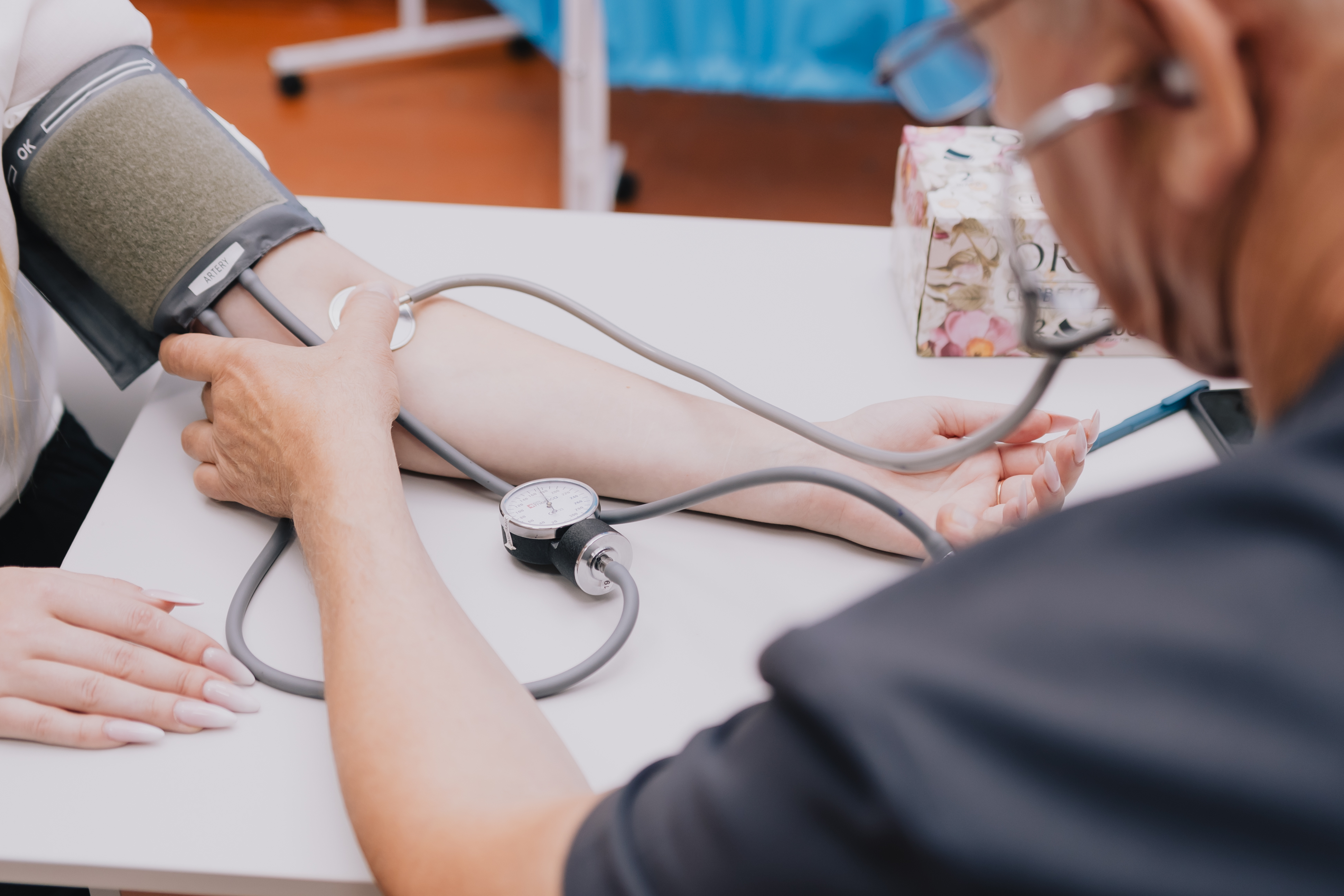
The Health Days launched as part of the project have already delivered tangible results. Approximately one in every six people who had their blood pressure and blood glucose levels checked was referred for further testing to identify potential health risks in time, including the risk of stroke.
“It was especially touching to see how people supported one another: some came with their neighbours, others with family members, while some took the courage for the first time to check the health indicators that had been worrying them for a long time,” Olha recalls.
Themed talks and educational sessions on healthy lifestyles and the prevention of common diseases were initially planned as one-off events by the NGO “Reconstruction, Strengthening, Development” in cooperation with its partner organisation, Médecins du Monde. However, they proved so popular with Vilnoandriivka residents that they are now held every month.
“During one of the meetings, there was a talk about cholesterol and the importance of reducing sugar consumption to improve our health,” Olha recalls a funny moment. “Usually, after these events, participants get together for tea and sweets. But this time, after the talk, everyone unanimously decided to give up sweets — and not a single piece of candy was eaten during tea!”
It may seem like a small detail, but this is precisely what makes such meetings valuable: people do not simply listen to information; they begin to reflect on their own habits and make changes.
“For us, this is the best confirmation that we have helped create not just a facility with nice furniture and modern equipment, but a genuine healthcare hub in place of the former FAP. A place where people can receive medical care, gain knowledge, connect with one another and feel that someone cares about them,” concludes Olha Stypanenko, head of the organisation.
This story was produced as part of the EU Unity4Community project, co-funded by the European Union and the Minderoo Foundation.