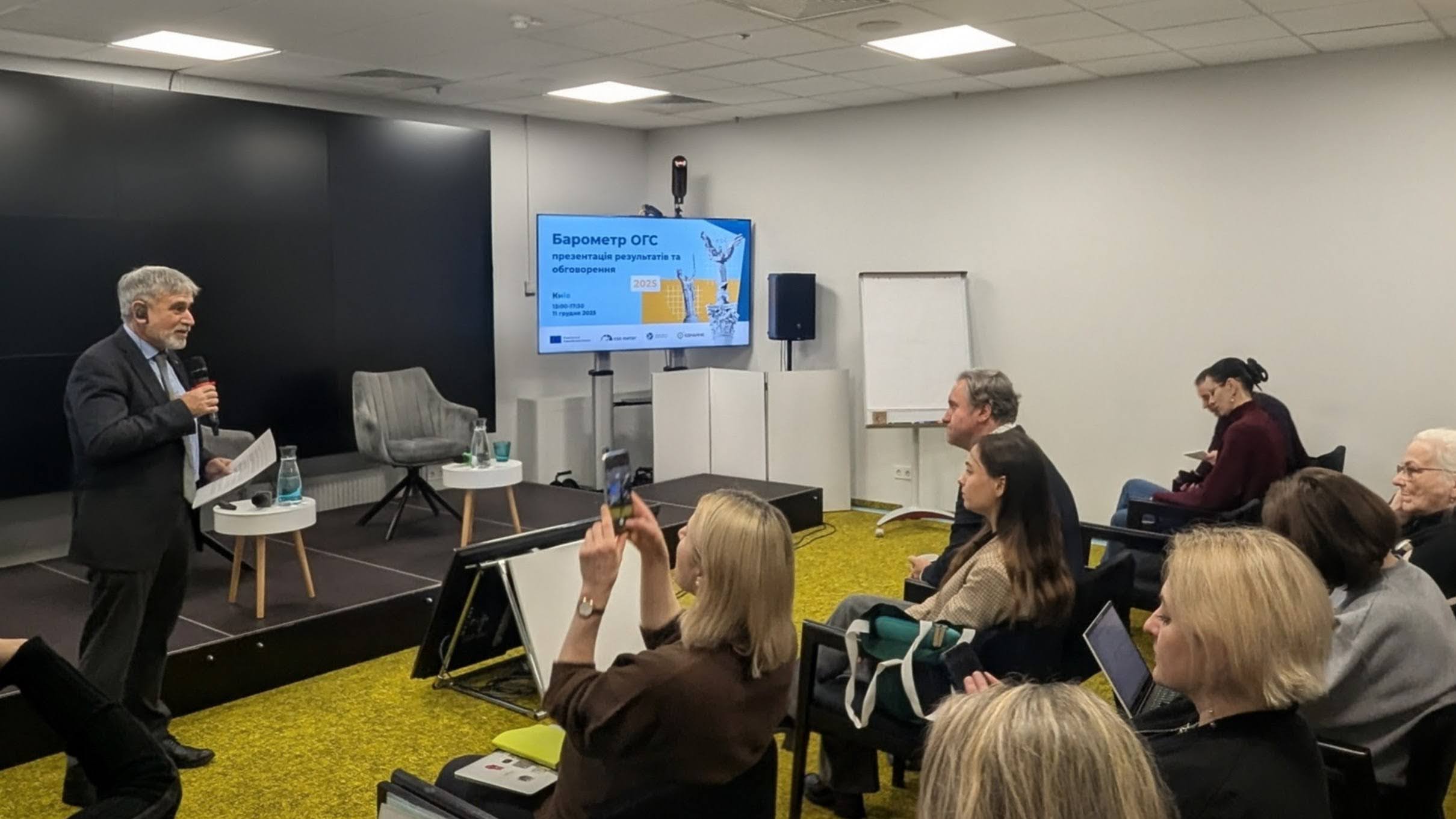
ISAR Ednannia presented the results of the study CSO Meter 2025: Ukraine. This is a comprehensive tool that assesses how enabling the environment is for civil society organizations, tracks the dynamics of legislative changes, and examines the real-life practice of CSOs. The methodology covers 11 areas and includes in-depth interviews, focus groups, and an analysis of international standards.
The opening of the event featured remarks by Head of Section European Integration, Governance and Rule of Law, Civil Society at the EU Delegation to Ukraine, Marianna Belalba, Legal Advisor at the European Center for Not-for-Profit Law (ECNL), and Volodymyr Sheyhus, Executive Director of ISAR Ednannia.
“The report clearly demonstrates that problematic laws can be modified through civil society. This is evidence of its real strength. A strong civil society is essential for Ukraine not only to protect the interests of Ukrainians, but also to advance in the process of European integration,” emphasized Asier Santillán.
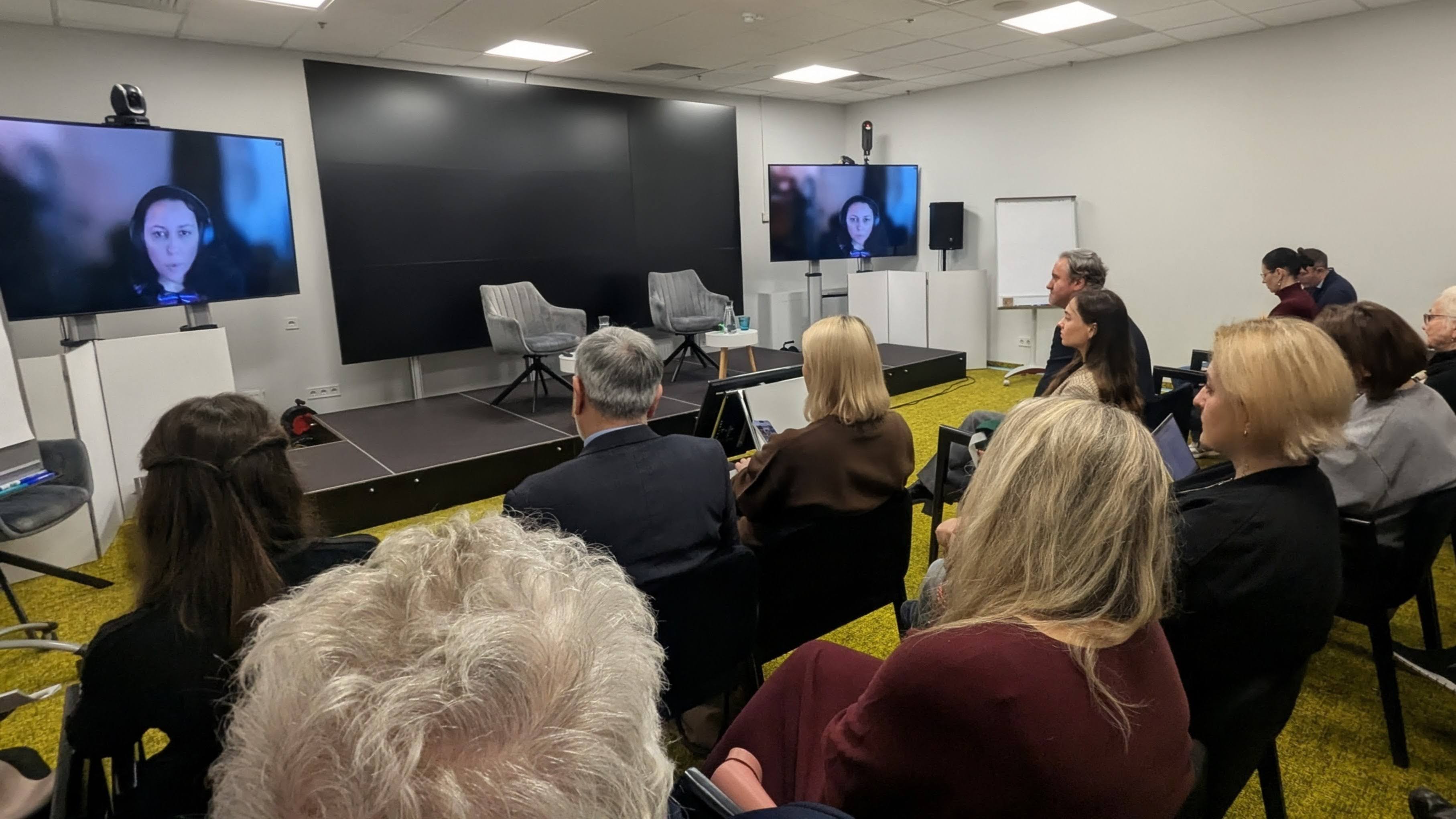
Marianna Belalba outlined key regional trends in the Eastern Partnership countries, including increasing pressure on the civic sector and reduced access to funding. She stressed the importance of systematic support and advocacy to ensure that identified problems are transformed into real change.
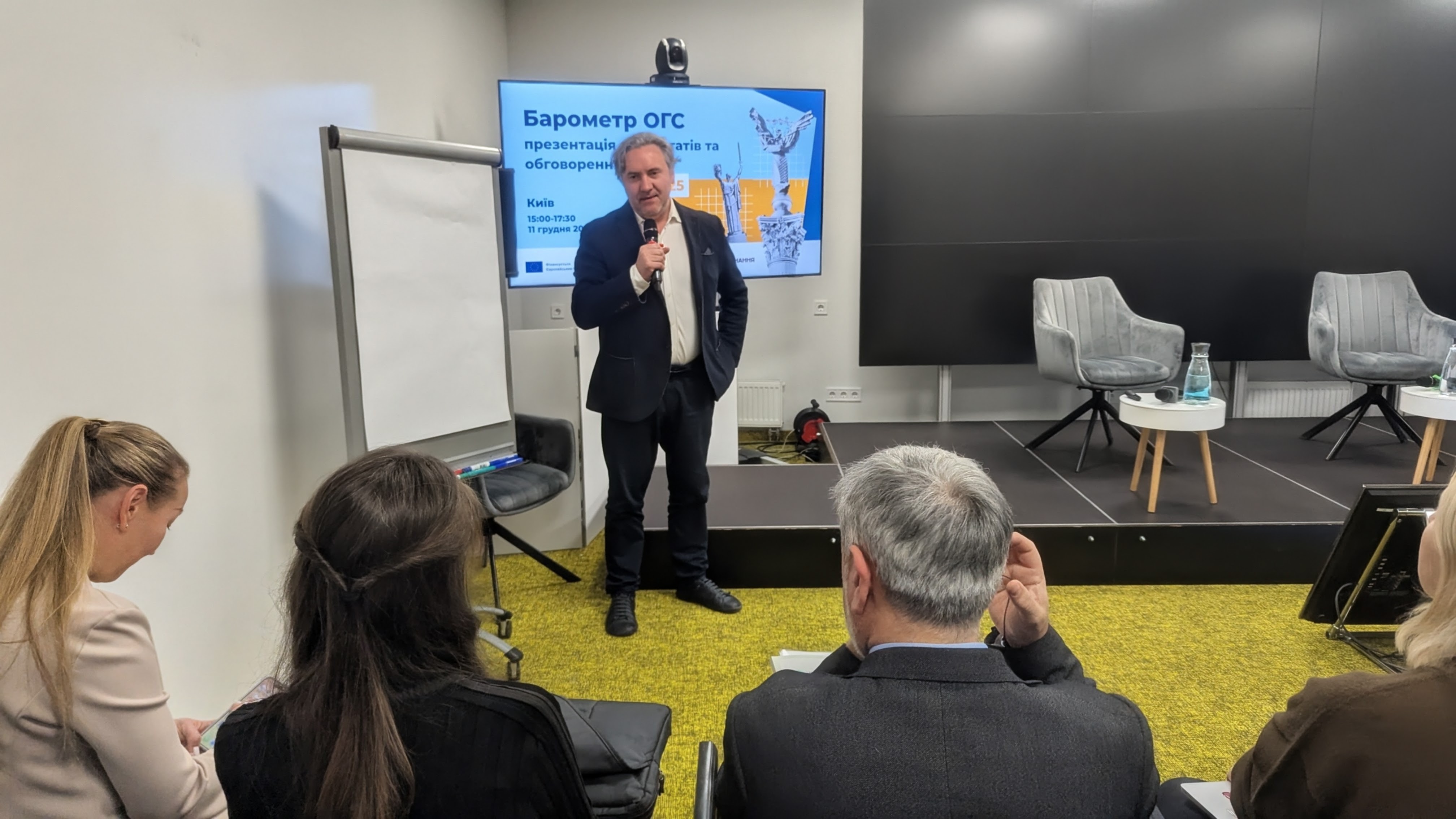
As Volodymyr Sheyhus noted, the CSO Barometer confirms the key role of civil society in Ukraine, highlights both its strengths and areas for development, and serves as a foundation for further joint efforts and advocacy in 2026.
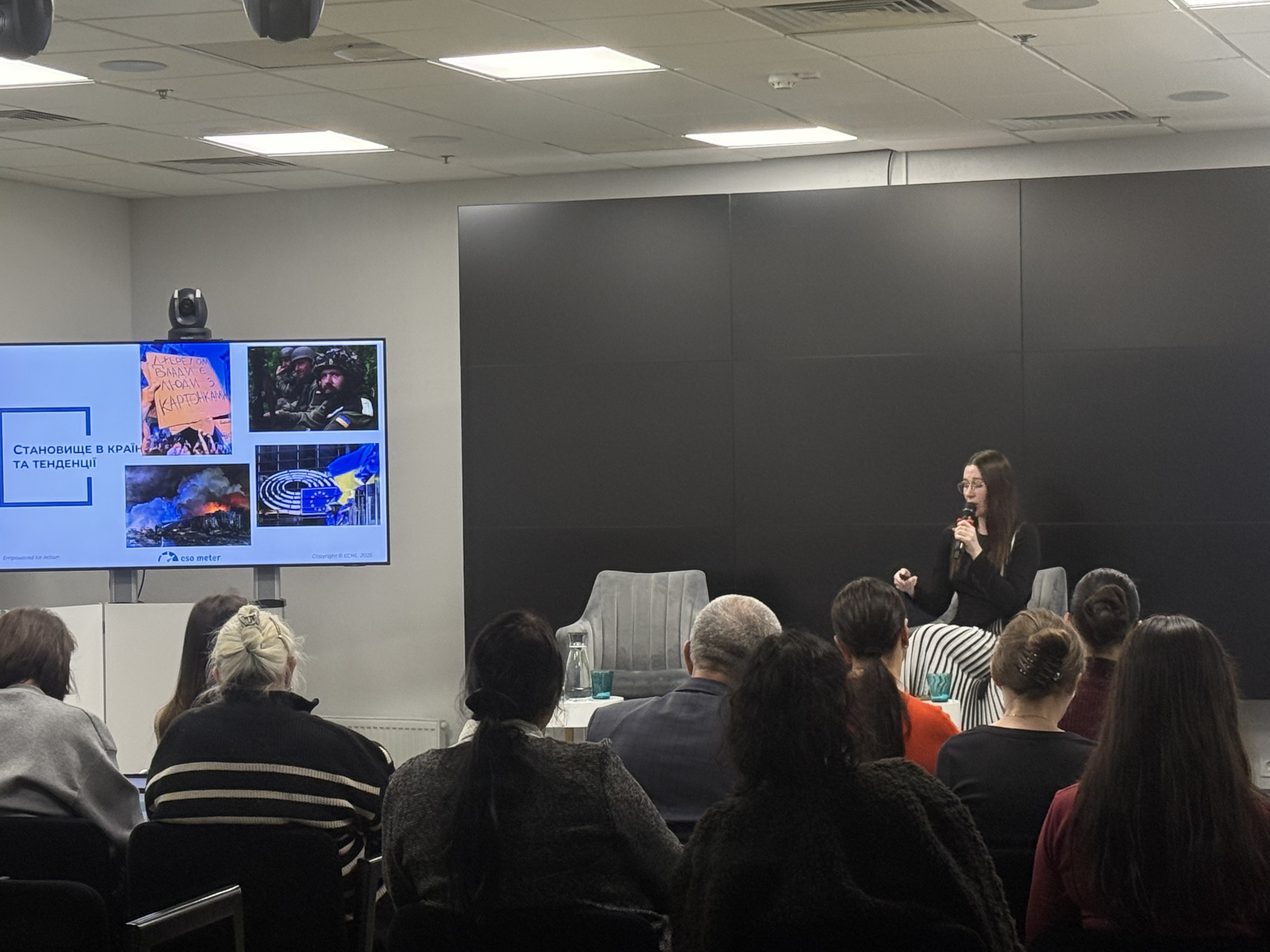
Maria Krasnenko, ISAR Ednannia expert and author of the study, presenting the findings, emphasized that in 2025 the civil society sector operated under the simultaneous impact of war, economic instability, and adaptation to European integration requirements.
Among the most notable positive developments, the expert highlighted the government’s adoption of three strategic roadmaps, including the roadmap for the development of democratic institutions, which envisages a comprehensive set of measures to create an enabling environment for CSOs.
Additionally, the introduction of a model statute and the possibility of online registration of NGOs via the Diia platform, which significantly simplified the establishment of new organizations, were stated as important. The expert also noted the introduction of the status of a verified humanitarian organization, allowing duty-free import of vehicles for evacuation and aid delivery; the adoption of legislation exempting social services from VAT; entry into force of legislation on participatory democracy at the local self-government level; and the government’s approval of the Action Plan for the implementation of the National Strategy for Promoting Civil Society Development for 2025–2026.
At the same time, several challenges remain particularly threatening: reduced funding for CSOs, leading to the closure of certain areas of work and independent media outlets; cases of pressure on anti-corruption and environmental activists; risks of censorship and threats to journalists; and controversial provisions of the Law on Lobbying, which create a risk of conflating public advocacy with business lobbying.
The study identifies seven key priorities for improving the CSO environment:
- full functionality of registration services in Diia, including amendments to founding documents;
- immediate entry into force of the Law on Public Consultations and mandatory, systematic conduct of such consultations;
- strengthening institutional participation of CSOs in public policymaking, particularly in the context of European integration, with the involvement of local and displaced organizations;
- expanding CSOs’ access to public procurement and improving awareness of participation mechanisms;
- ensuring access to banking services and cross-border payments;
- investigation of crimes committed by the Russian Federation against activists and media, and bringing perpetrators to justice;
- adoption of Draft Law No. 8084 on modernizing the system of state registration of civil society organizations.
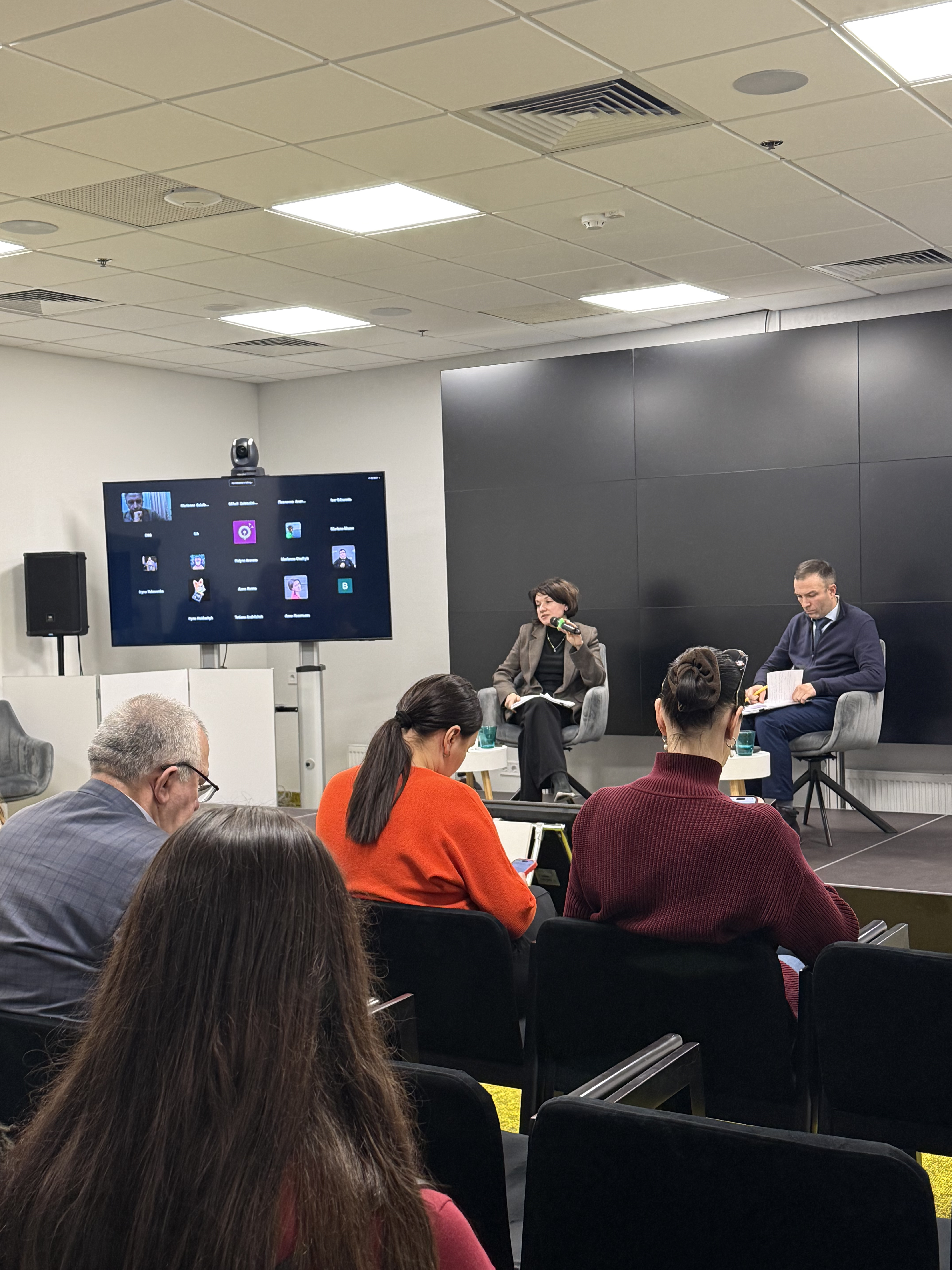
Proposals and assessments were also presented by Nataliia Oksha, Deputy Director of the Department of Information and Public Communications of the Secretariat of the Cabinet of Ministers of Ukraine, and Maksym Latsyba, expert at the Ukrainian Independent Center for Political Studies.
In the near future, after all recommendations have been finalized, the final version of the study will be published.
This event is organised within the Action “CSO Meter: Empowered for Action”, funded by the European Union. The Project is implemented by the European Center for Not-for-Profit Law Stichting (ECNL) and its partners: Transparency International Anticorruption Center in Armenia, Promo-LEX Association in Moldova, and the ISAR Ednannia in Ukraine.