This is exactly how long it took for communities to ensure the continuity of social services during the energy crisis.
As power outages began to disrupt everyday processes, the most critical element came under threat — support for children and families.
January and February became a real test for everyone, especially for vulnerable families. They turned to the places where they were used to receiving support — service providers under the Small Grants Programme.
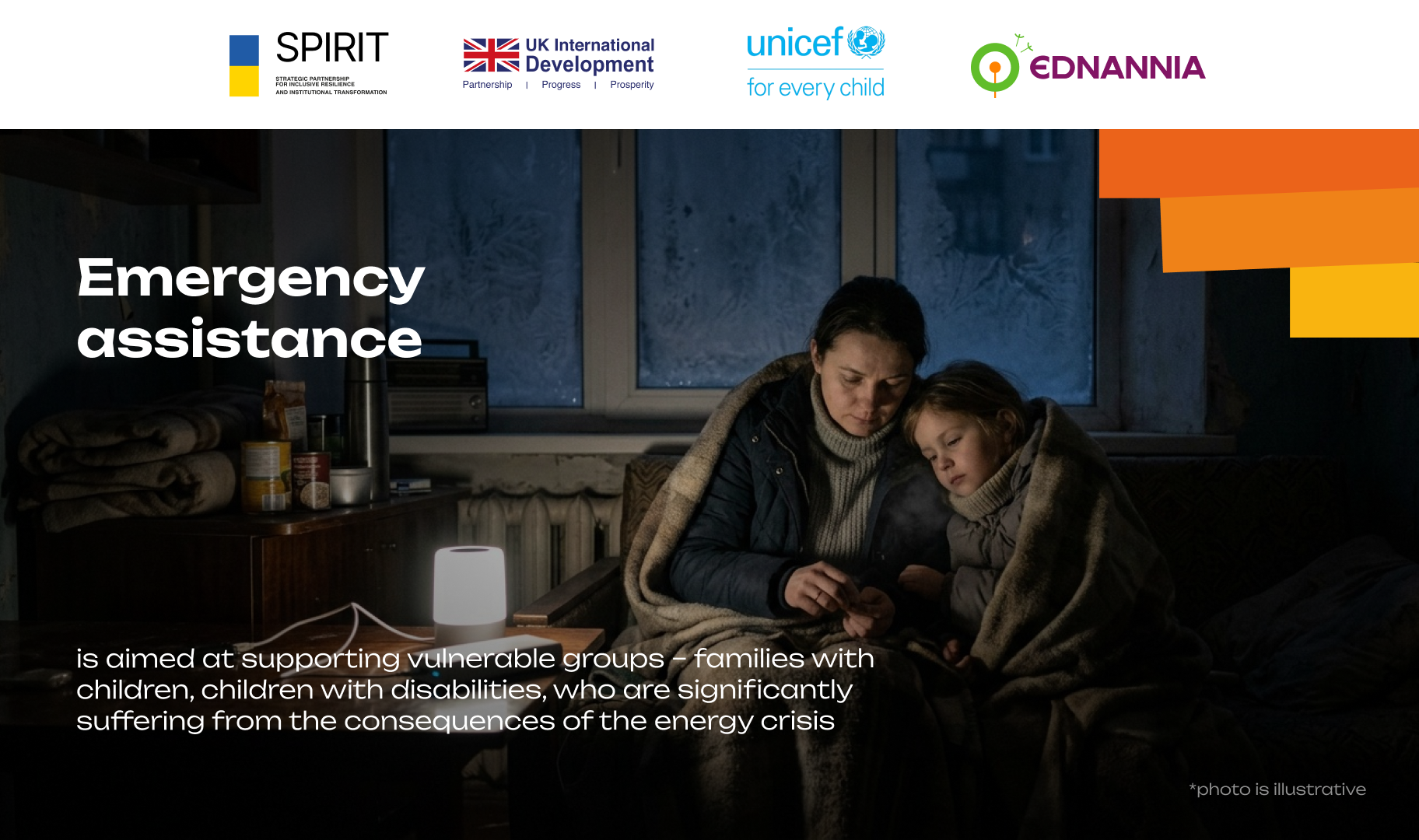
In response to these challenges, the call for proposals “Emergency Assistance to Support Vulnerable Groups — Families with Children and Children with Disabilities” was launched. Its aim was to provide rapid and targeted support to organizations working with vulnerable groups in communities.
We are now reporting on the winter and early spring months, when service providers became the first point of contact for vulnerable groups — children, families, and persons with disabilities. Blackouts and power disruptions threatened the operations of these organizations, which is why targeted emergency support was launched promptly, already in February. It proved to be fast and effective, and only now has there been an opportunity to take stock and share the stories and achievements.
The call was implemented within the framework of the existing project “Small Grants for Social Services for Families with Children and Children and/or Early Intervention Services.” This format became an additional rapid response tool, enabling support to organizations already working with families and delivering social services locally.
The support covered Kyiv city, Kyiv, Kharkiv, and Mykolaiv regions. It took only 19 days from the announcement of the call to the first disbursements. This pace ensured that services continued uninterrupted even during power outages, preserving critical support for families.
A total of 23 organizations received support (including 4 municipal institutions).
This made it possible to:
continue the work of social workers, psychologists, and rehabilitation specialists;
equip organizations with the necessary equipment and materials;
adapt service spaces to function during outages and prevent forced closures;
provide beneficiaries with essential resources based on identified needs.
Already in February–March, under the emergency response component, this support translated into tangible results for people:
1,354 individuals received psychosocial support, more than half of them children;
221 individuals received humanitarian assistance;
571 people accessed safe spaces, including nearly 200 children;
46 individuals received services related to the prevention of gender-based violence;
an additional 28 individuals were referred to longer-term support within the Small Grants Programme.
Among those who received assistance were 765 internally displaced persons and 238 persons with disabilities.
During periods of increased pressure, it is precisely this kind of rapid and targeted support that enables communities to maintain continuity of assistance for those who need it most.
The project is funded by the UK Government under the SPIRIT project, implemented in collaboration with UNICEF Ukraine, with administration by ISAR Ednannia.