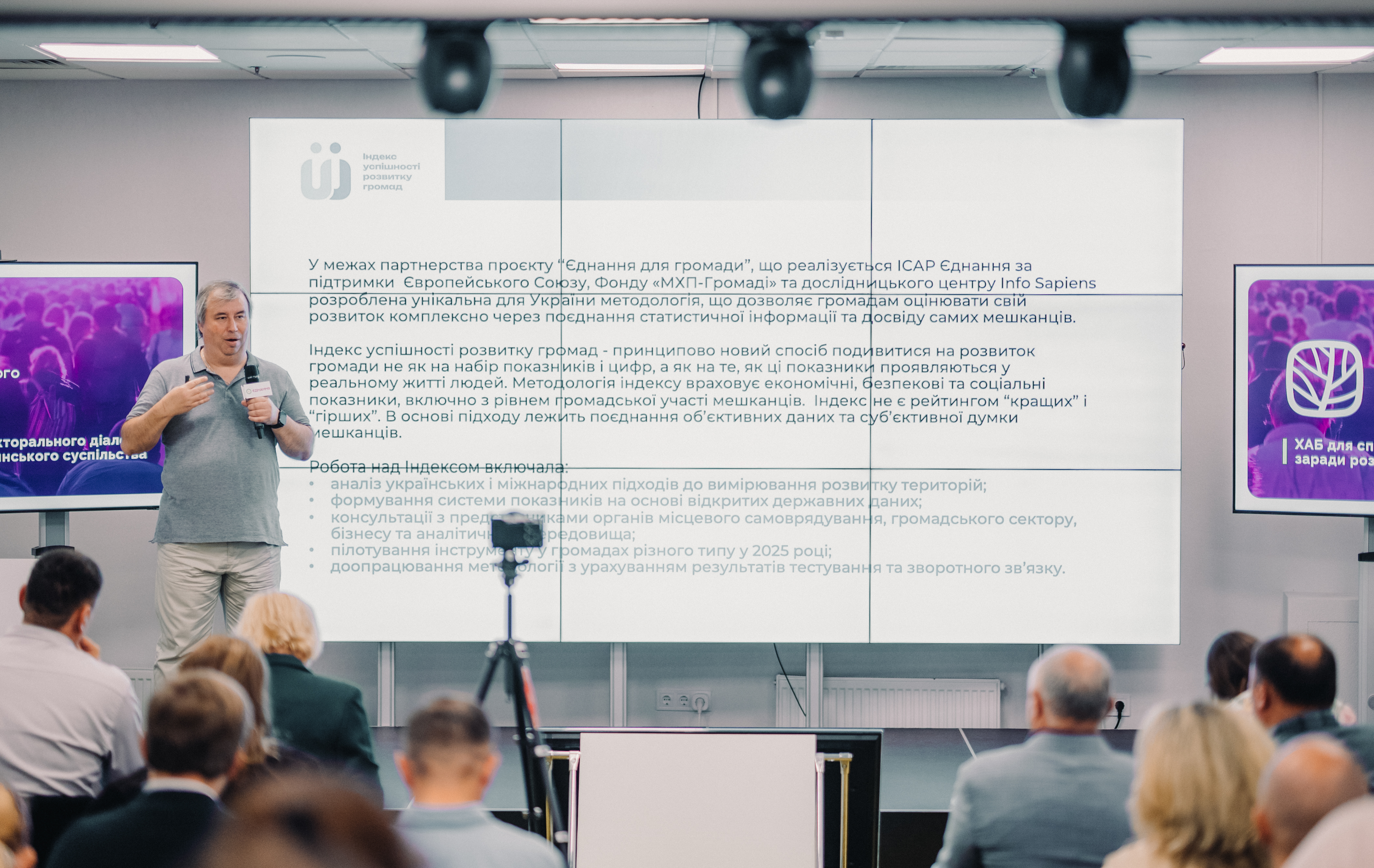
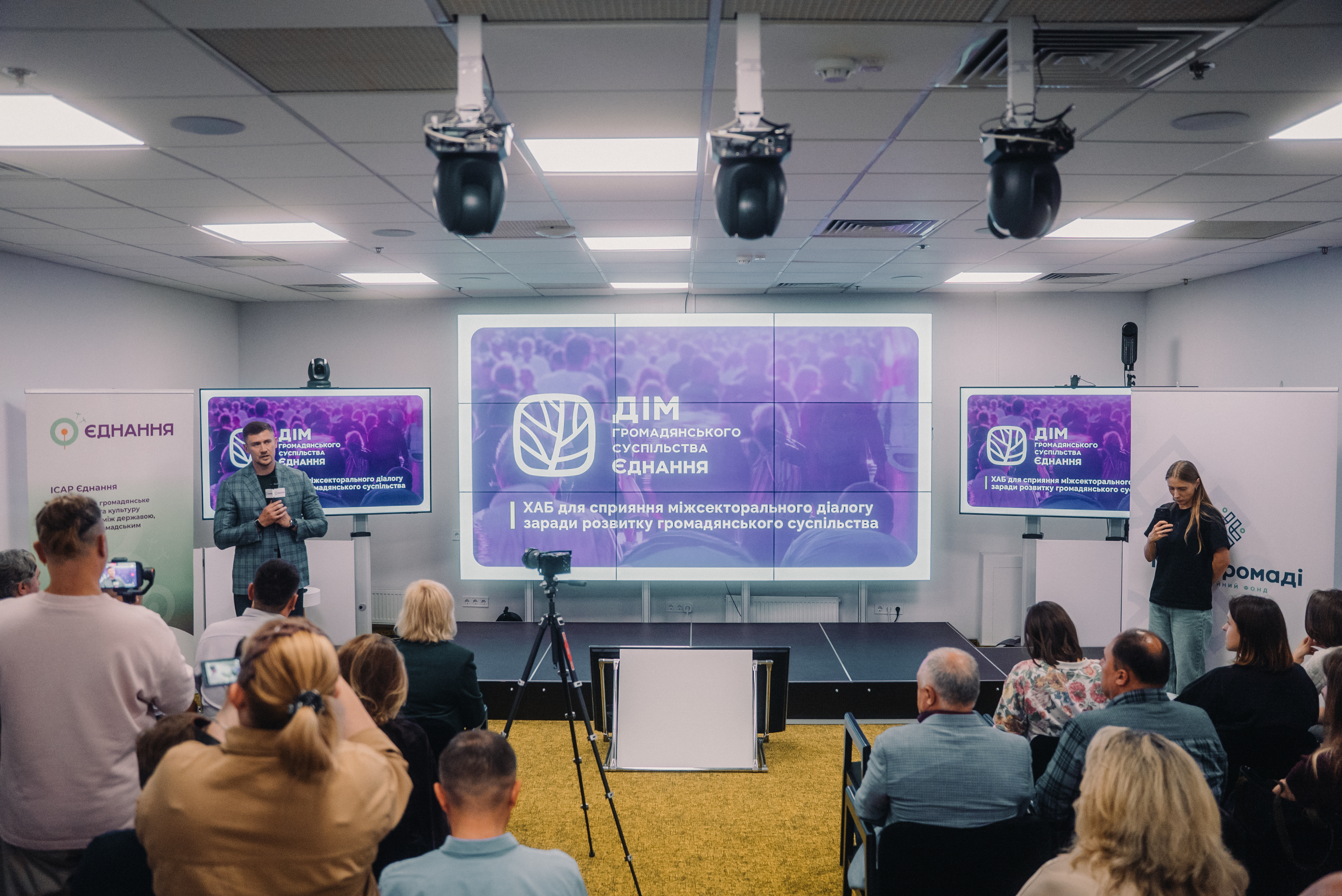
On 21 September, the results of the second wave of the Community Development Success Index were presented in Kyiv. The study assesses community development not only through statistical indicators, but also through how residents themselves perceive living conditions, opportunities and changes in their communities. The presentation brought together representatives of local self-government and national government, civil society and international organisations and programmes, businesses, research and academic institutions, as well as independent experts in local development. Experts presented the strengths and key challenges identified in the communities covered by the study, the factors influencing how residents assess their community’s success, and ways in which the Index can be used for local development planning.
The second wave of the study covered seven communities across four regions of Ukraine: Budyshchenska, Kalynopilska and Stepanetska communities in Cherkasy region; Makarivska and Yahotynska communities in Kyiv region; Ladyzhynska community in Vinnytsia region; and Petrikivska community in Dnipropetrovsk region. The Index focuses on five key areas of development: the economy, quality of governance, security, the social environment, and civic participation.
“Civil society and social cohesion account for 15% of a community’s overall success and rank among the three most influential areas, alongside security and the social sphere. This means that investing in people’s civic engagement, trust and local organisations is, in fact, an investment in a community’s capacity to develop,” said Volodymyr Sheyhus, Executive Director of ISAR Ednannia. Participants also discussed how to turn research findings into practical steps — through updating strategies, setting priorities and planning local development. This approach reflects key principles of Ukraine’s European integration path: transparency, accountability and measurable decision-making at every level.
“The Index is not about comparing communities with one another. It gives each community an opportunity to see itself through the eyes of its own residents. Every community has its own context, resources and challenges. What matters to us is to show communities how they are perceived by the people who live there, because this influences whether people will want to stay, invest in their community and take part in its life,” explained Maksym Mashliakivskyi, the study’s methodology expert and a consultant at Info Sapiens.

The Index offers a shift from intuitive decision-making towards evidence-based governance. It can be used by local authorities, donors, businesses and civil society organisations as a shared framework for assessment, planning and cooperation. The second wave of the study expanded the number of communities with access to this type of data and demonstrated that the tool can be applied in territories with different experiences and challenges.
The Index was developed by ISAR Ednannia and the MHP-Hromadi Charitable Foundation, in partnership with the research centre Info Sapiens, with the support of the European Union in Ukraine as part of the "Ednannia for Communities" project partnership.