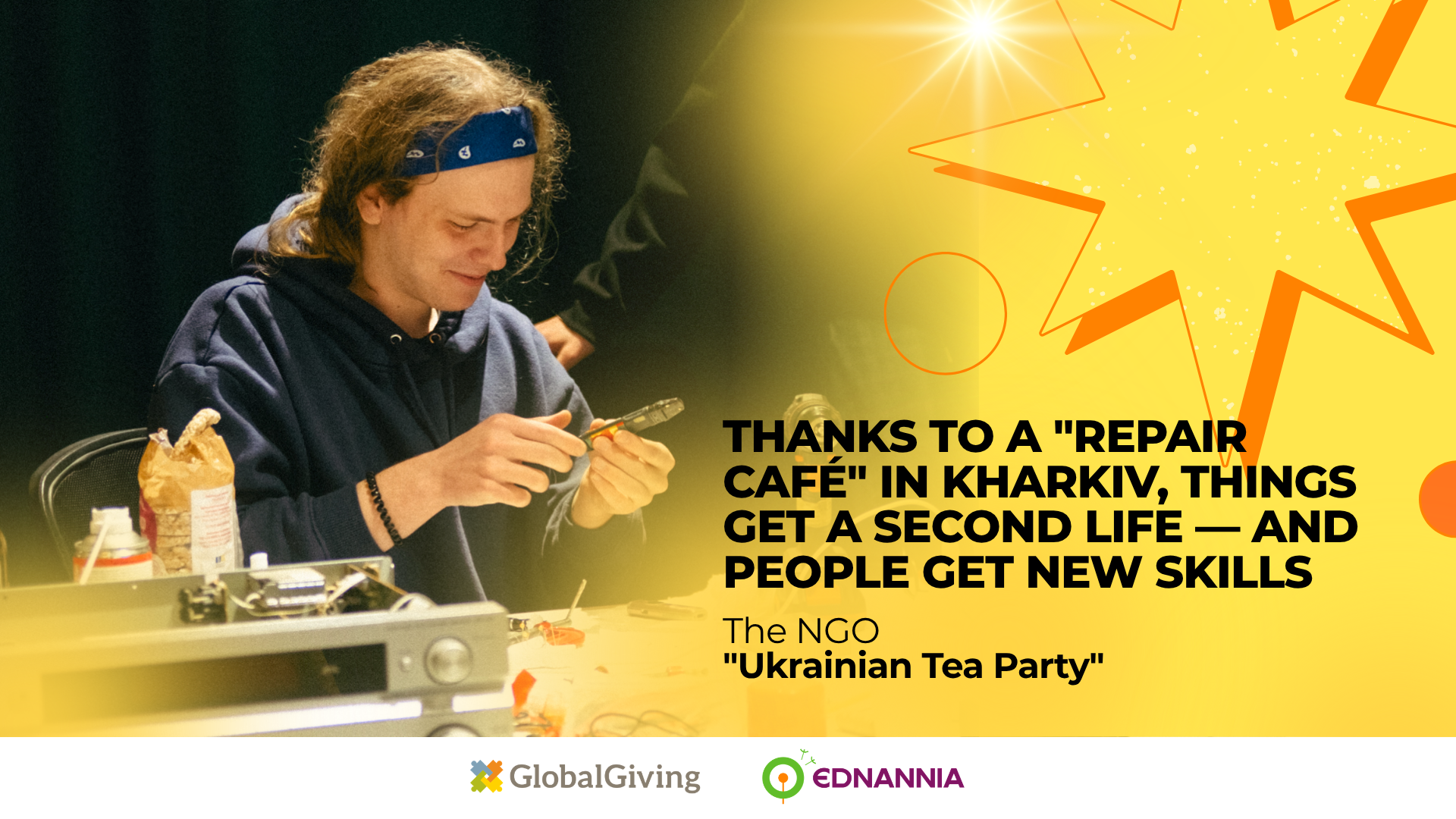
Since the start of the full-scale war, silence has become a luxury in Kharkiv, and every loud sound makes hearts skip a beat while people wait to see whether it's a missile, a shell, or a drone. But the workshop space on Honcharivskyi Boulevard sounds different: the hum of a 3D printer, the clatter of a sewing machine, the voices of people who came not to lose things, but to save them... It was here, in spring and summer 2026, that a place called the "repair café" appeared, thanks to an initiative by caring Kharkiv residents from the NGO "Ukrainian Tea Party." Here, anyone can restore a broken item under the guidance of an experienced craftsman or craftswoman, with the right tools and equipment on hand.
And although the idea isn't unique — and about the only things a genuine café would offer here are unlimited conversation and instant coffee — the chance to fix something with your own hands instead of throwing it away is deeply valuable. Especially in a country where something is destroyed every single day: from buildings and businesses to lives and futures. So as soon as the idea won support from the "Sparks of Communities" grant competition by ISAR Ednannia and GlobalGiving, Kharkiv activists began searching for craftspeople across various repair specialties (from small home appliances to bicycles and furniture) and collecting repair requests from community members. With support from the "DRUK" cultural and community center and the open workshop "Ihrashkova," the plan was to hold eight large-scale repair events. But at ISAR Ednannia's suggestion, the project team shifted focus, choosing individual support over the number of events. This allowed more time for complex cases and turned quick fixes into genuine mentorship.
Grant funds were used to purchase equipment that had been missing, and now the workshop has everything: from a welding machine to a 3D printer that prints parts for retro devices. Oleksandra Shchur, co-founder of "Ihrashkova," emphasizes that the project's goal isn't service — it's skill transfer: when a person looks under the hood of their gadget and understands how it works, they stop treating things as disposable plastic. It's a shift in mindset that starts with your own shelf at home. And for a city whose logistics are already strained by the war, it's also a matter of survival.
Over four months, participants repaired a huge variety of items, and each one has its own story. A globe-shaped chest brought someone's family memories back. Eight repaired bicycles gave people mobility in a city with limited transportation options. Three owners of headphones now listen to music or audiobooks instead of the whistle of shells. More than ten table lamps, four film cameras, a lighting controller, clothing — over 4 months, more than 70 Kharkiv residents came to the café, whose belongings got a second life, and who themselves gained a sense of calm and balance that working with your hands brings.
And really, it's not about the numbers at all. People kept coming back, brought their friends, became part of the community. The project proved that solidarity among Kharkiv residents is built on creating together. A culture of repair is the antithesis of destruction. It's a culture of the future, where skill reigns instead of helplessness, and mutual support replaces loneliness.